Wednesday, 24 January 2018

Station to Station - University Exhibition


Recently while lost as usual in Osaka, then going into an underground train station to find my way home, one came across a university art exhibition in a largish space next to the train station subway walkway, its a great area to hold such an energetic show of students artworks.


It was very enjoyable to wonder around this University Exhibition in Osaka, it bought back many fond memories of my own art student days of study, which was very different from the electronic gadgetry that students seem to need nowadays, it was just a pencil and paper to draw on, for it was before the iphone, ipad or digital everything, yes sorry to say I am one of the last of the art dinosaurs but nonetheless that doesn't stop ones appreciate of the aesthetics efforts within this show which are very interesting.


One does not know who the artists are in this exhibition (as cant read Japanese) they exhibit equally and anonymously, so when looking at the artworks the experience is directed at the aesthetics and one of the first sensations realised is the energy these artists have, its impressive to see so many ideas produce in large and small artworks.   


Plus what one also liked very much was the installation of the artworks, it wasn't compartmentalised into areas of painting, sculpture, printmaking, electronic arts etc..., one could walk around this space and engage a variety of aesthetic sensibilities, well placed next to each other, so presumably the audience could glean knowledge from each artists artworks in unity and diversity, so as a cohesive whole this show worked very well.


In leaving the Station to Station Exhibition what was realised is the next generation is there to take over from where the apriori group of artists when they leave this planet, to make there own tracks into uncharted aesthetic horizons, for like all the artists before them in history they are Driven. Many thanks to the artists who put on the exhibition a good experience!


Thursday, 26 January 2017

Sadaharu Horio - Art Space Niji - Kyoto


Sadaharu Horio at Art Space Niji - Kyoto

I like going to Horio's exhibitions/performances because one never knows what to expect and at times I'm pretty sure he doesn't either. Ones guess is that Horio's exhibitions and performances have nowadays attain a kind of randomness that many artists may well aspire too and interestingly his system of creating appears to confirm this, as he travels  light to his next venue, ready to create, through a system in praxis that contains the minimum of delay,  so the artwork can just pour off his nervous system.

Such unexpected or let’s say spontaneous art by artists is really hard to do, but Horio deconstructs the art space or gallery into his own studio area, he seems not to separate the different spaces mentally, so that some unhibited primeval nervous system response manifests itself in the terrain, and there appears to be no rehearsals. For within Horio's art he creates the impression that there is no second chance, to cover or avoid those uncontrolled spillages of aesthetic praxis that's why his art works it’s in your face. 

Horio's spontaneity in creation does have a history in Japanese Sumi-e if one has seen the artworks of Zen Circular painting, which I experienced in a Gallery in Kyoto, with an equally interesting translated lecture of how the artist would sit for a sustained period of time, then all of sudden just create an amazing ink image on a scroll, very rapidly with a few strokes. At times from my experience Horio creates a similar visual experience to the audiences that follow his oeuvre.

These artworks by Horio on show at Artspace Niji are raw and one particularly enjoyed his dot artworks, how lively they are as a body of work, with immediacy to each image that’s exhibits an intelligent playful arbitrariness of where the paint submits to gravity and runs downwards on the wooden panels, after it has been placed onto the surface by an overloaded brush, its wonderful art 

Link to Art Space Niji
http://www.art-space-niji.com/


Thursday, 30 June 2016

Kuniyoshi and Kunisada at the Kobe City Museum


Kunisada (Bijin) ca.1860
Oban Tat-e (14 by 9.75ins)
Agemaki in layers ofd warm clothes looking out into the snowy garden where a girl is bringing in Peony.
Meigi Sanju Rokka Sen (36 Famous and Fine Courtesans)
Collection Ozgaka 

Currently on show at the Kobe City Museum there is a collection of prints from the Boston Museum of Fine Arts in America and what a stunning exhibition this is, absolutely outstanding from beginning to end, gosh the aesthetic sensibility in creating fine art doesn’t get any better than this, it’s just wonderful. 

These Edo master artists were really ahead of their time, one might suggest by the way they've used colour, composition and print textures, not only that the modernity of the image has travelled time and space probably much better that the artists themselves probably anticipated, very well. 

That's the issue about this exhibition, its modernism (no wonder the French artists were stunned when they saw such artworks, its obvious in this exhibition). Aesthetic shifts within the fine arts can happen at any time within art's history and at this particular museum it regularly brings you artworks from ancient and modern histories all the time, so one has the luxury to make comparisons, this doesn't happen often throughout the world.

For example, at the Kobe Museum in recent times there was an ancient Egyptian exhibition and within this show was this stunningly sculptured cat, very modern in shape, almost as if it had been made within the last few years.  This ancient Egyptians cat's aesthetic had travelled time and space so freshly, it was as though things made in the past can reveal themselves equally freshly as one gazes at it, something akin to a time travelled sensation being witnessed as it happned and within this exhibition  many of those memories that can be had in the present time. 


Kuniyoshi Suma Beach Kobe
Collection Ozgaka


Everything changed on 1 April, 1867, when the Exposition Universelle opened on the Champ de Mars, the massive Paris marching grounds that now lies in the shadow of the Eiffel Tower. It featured, for the first time, a Japanese pavilion – and its showcase of ukiyo-e prints revealed the depth of Japanese printmaking to French artists for the first time.
by 
Jason Fargo
http://www.bbc.com/culture/story/20150409-the-wave-that-swept-the-world

The way modernity resonates from these Kuniyoshi and Kunisada prints is more than likely why French artist Claude Monet collected Ukiyo-e for he understood the innovation of Japanese aesthetic, for example; the focus on a singular subject matter like Kunisada's 36 Famous and Fine Courtesans. The French painters copied many aspects of Japanese Ukiyo-e for instance, Degas French Ballerina's  or Monet's a Water Lilly that he was so fond of it didn't matter, what mattered was that they could experiment from what they had gleaned from collecting and studying the Japanese prints.


Who were the better artists at making aesthetic travel so freshly through time and space is very debatable was it the Japanese Ukiyo-e Edo Masters or was the French Impressionists? From my experience after seeing this show by Kunisada and Kuniyoshi, the French are still behind the eight ball like much of the western world and I can’t image there will be any such scintillating sensibility as evidenced within these artworks any time soon. So if you’re in Kobe at the moment do go to Kobe City Museum, outstanding.

Thursday, 5 May 2016

Masao Sasaki - Gallery Yamaki Fine Art - Motomachi - Kobe


Masao Sasaki's artwork titled: Overflowing Fire 

This current exhibition now on show at Gallery Yamaki Fine Art in Motomochi, Kobe is a very good one and the above artwork by Masao Sasaki  titled; Overflowing Fire is a very intriguing, not  only because of the way the artist has partially reduced the newspaper back towards valueless carbon but by using the stock exchange listing page for the front of the sculpture it tends to add a savvy touch to the object.

But beyond the philosophical diatribes that could take place either when viewing Masao's Overflowing Fire independently or in groups is this wonderful aesthetic of mere matter, its strange how such a praxis tool such as fire with its deconstruction of a objects form allows such sensitive hues of greys, to curl, break away and form water traces when the flames are extinguished, creating a kind of aesthetic weft of ironic visual poetry.

Masao's artworks like many artists who use fire often can create extremely beautiful artworks. For example; one only has to look at glass or ceramic  objects created from intense heat to see hues and tones that often tend to mesmerise ones senses and this artwork above has some of those aforementioned qualities. 

Although there is a darker memory that resonates from this particular artwork titled; Overflowing Fire and that is the Black Rain of Hiroshima  that one can partially witness due to the remnants of it at the Hiroshima Memorial Museum, whether the artist meant this to happen one doesn't know but the title itself tends to echo the misery caused by the Atomic Bomb and fires afterwards, its a bleak remembrance.

And maybe that's why these materialist artworks by Masao on exhibit at Gallery Yamaki Fine Art have such a tension, it pulls the audience in two extreme directions, by chance or deliberate it doesn't matter, its there in the gallery to experience and its a sensation well worth going to engage. So if your in MotoMachi Kobe please go and see this most interesting exhibition here is the link:http://www.gyfa.co.jp/index_Eng.htm


Atomic Black Rain link
http://www.pcf.city.hiroshima.jp/outline/index.php?l=E&id=44

Tuesday, 8 March 2016

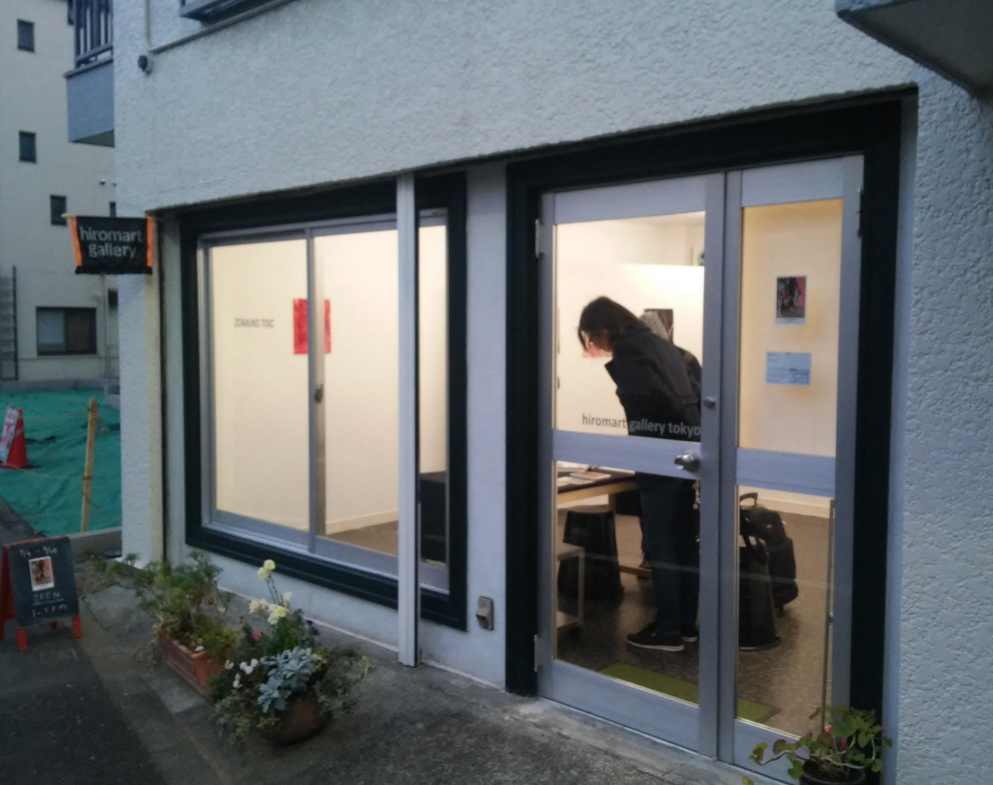
Disconnected Pattern - Zdravko Toic - Hiromart Gallery - Tokyo


 Thus the man who is responsive to artistic stimuli reacts to the reality of dreams as does the philosopher to the reality of existence; he observes closely, and he enjoys his observation: for it is out of these images that he interprets life, out of these processes that he trains himself for life.


Friedrich Nietzsche
The Birth of Tragedy 1872 p. 15
https://en.wikiquote.org/wiki/Art


Currently on show at Hiromart Gallery in Tokyo there are some very interesting artworks by New York based, Croatian born artist Zdravko Toic. These mixed media artworks by Toic that at times consist of collage, colour and sumi ink, handmade paper or string take the viewer of voyage of one artist’s aesthetics discoveries from remembrances.

Human memory is a strange creature at the best of times and it acts independently from one human to another and strangely/randomly manifests itself in unity and diversity with all these other living beings remembrances through time and space.

What kind of patterns evolve from all these exhibited remembrances by various living beings through time and space with the influence of delay is amazing to say the least. For at times human remembrances may be displayed as a peaceful gesture, others a lazy movement or through majestic artworks or smallish playful or poetic colour ink traces on paper as Toic has achieved so well within this exhibition.

It appears to be true that all patterns are disconnected in visual arts for the human experience as it tries to emerge from internal conscious, into an artwork that is understandably so littered with stops and starts due to the way the artist works through time.


What might has been produced by Toic within this exhibition is a very engaging series of artworks representing the engine room of his artistic praxis being the choices of colour, materials, papers and mark making creating a kind of aesthetic poetry within the space. So if you're in Tokyo please go and have a look at the artist’s praxis.


Link to gallery  

Sunday, 31 January 2016

The Cats from Japan - Kobe Artists Museum - Rokko Island - Kobe


This is an outstanding exhibition, it’s a knockout, fantastic and thoroughly enjoyable, it’s got just about everything to exhibit from an artist's praxis and the idiosyncratic societal memory seen manifested through the motif which happens to be a cat or more precisely the cats of Japan it’s a want to visit show.

The exhibition has so many images of cats you lick your lips for it is a tasty visual feast as there is coloured cats, lady cats, mean cats, sexy cats, scaredy cats, fat cats, slim cats, demon or ghostly looking cats, fighting cats and lucky cats, there is just about every sort of mood, colour, texture and shape one can imagine, and that’s what makes this show so important for artists to see, it’s about how the human imagination transforms the cat into something spectacular to see.

There is in this exhibition cats printed by Ukiyo-e Masters to artists who live in the now and what is so stunning is how all these cats in painting, print, ceramics and sculpture though the last two hundred fifty years, that have been sequentially curated, presents such great viewing pleasure and highly educational in how humans and cats behave.

For example, there is a ukiyo-e print by Hiroshigie titled; 浅草田甫酉の町詣 Asakusa Ricefields and Torinomachi Festival, c 1857 - 58, the cat peers out of the window from a house above a village or suburb of Tokyo with snow covered Fuji's majestic presence in the distance, directly above the what one might call a snobby postured well off cat, seemingly content in its own existence and upmarket lifestyle, this is no poor cat that's for sure. 

For in the bottom left hand corner of Hiroshigies print Asakusa Ricefields and Torinomachi Festival there is a grouping of  four Kanzashi which may well represent the owner of the cat looking out the window in well off, one couldn't imagine a rice farmers wife having so many. The cat is unlike the rice farmers in the middle distant of Hiroshigie's ukiyo-e for there life is hard and the leisure of looking out a window doesn't seem to be in their lifestyle. 

(link to Asakusa Ricefields and Torinomachi Festival here https://upload.wikimedia.org/wikipedia/commons/d/d1/100_views_edo_101.jpg)
There are many stories within the images like the one above as witnessed in Hiroshigie's print but like the cat, take time to study the imagery on show. Lastly, the catalogue is well put together and if you like art and cats its a must buy, the amount of imagery within it supports the exhibition extremely well, so if you're in Kobe don't miss this stunning exhibition at Rokko Island link is below.

http://www.city.kobe.lg.jp/culture/culture/institution/yukarimuseum/index.html


Monday, 28 September 2015

Kobe Art Marche 2015 Japan - one of the Best Venues to have an Art Fair.

Painting by Yuka Umino 会場: 創治朗 sojiro -Contemporary Gallery
at Kobe Art Marche 2015


Kobe Art Marche 2015 must be held in one of the best locations in the world, its a knock out position with its  stunning views from the mountains close by to the harbour, its breath taking scenery and there were more than just a few very good artworks on show in this art fair

One young painter that caught my eye was Yuka Umino from  会場: 創治朗 sojiro -Contemporary Gallery her work is really in your face from the sensual applications of oil traces, to subject matter which is mostly figurative.

It's not often nowadays one comes across such a young committed figurative painter and its very refreshing to see, plus its especially wonderful to witness an artist whose paintings contain such a strong sensory impact on first visual contact as Yuka has achieved here within this small to medium body of artworks. 

The other issue that is so likable about Yuka's paintings is that they remind one of the British artist Paula Rego not so much in style but the kind of personal histories that are displayed within her motifs, and in the way she places the figure on the canvas. Yuka's is aware of how she guides the viewer into the picture and what is important for her to exhibit to the audiences and if it causes one to question there position within the societal memories all the better for modern art, this critical questioning painterly attitude by Yuka reveals there is a growing maturity and impact in what is happening within her studio praxis.


                                           Sculpture by Takashi Yukawa 
                                                              Ashiya Garo 

One of the issues that is noticeable at times is the lack of figurative sculpture that is on show nowadays, its like something from another time but that is not the case at all. If anything figuration in sculpture is vitally important now for it has a kind of humanity imbued within it when created well that tends to resonate with the visual audience far more at times than many other mediums in art do.

So it was great to see wood being carved, turned and painted so exquisitely by Takashi Yukawa at Ashiya Garo because the sensation of wanting to touch the form surfaced very quickly when the optics picked up the wooden exterior qualities, alerting ones nervous system. 

Other artworks one enjoyed were the scintillating glass works by Yukako Kojima at Gallery Ponte from Kanazawa imbued with the deep grey turquoise hues that seduce the eye into an almost trance like enquiry, it is in a way looking like into the void of blackness, interrupted by the intermittent speckles of flickering interplanetary light, making most enjoyable. 

Lastly, in the Gallery Access there was a delicate selection of small craft works ranging from ceramic bowls to glass sake cups, these one wanted to hold, touch and even drink sake out of in the now which is a credit to the makers of the objects being Hitomi Sugimoto, Masako Niimi, Kazumasa Izuno and  Nobuyasu Yoshida. To the organisers, artists and there representative galleries thanks for putting on a great art fair in one of the most beautiful locations in the world being Kobe.  


Kobe and the Supermoon Rising 

Link to Gallery Access artists 
http://www.art-marche.jp/2015/artist/nobuyasu-yoshida.php
http://www.art-marche.jp/2015/artist/masako-niimi.php
http://www.art-marche.jp/2015/artist/hitomi-sugimoto.php
http://www.art-marche.jp/2015/artist/kazumasa-izuno.php

Link to Yukako Kojima
.http://www.art-marche.jp/2015/artist/yukako-kojima.php
Link Ashiya Garo
http://www.ashiya-garo.com/work/
http://www.art-marche.jp/2015/artist/takashi-yukawa.php

Link to Yuka Umino
http://www.art-marche.jp/2015/artist/umino-yuka.php
http://gallerysojiro.wix.com/sojiro